
Fruit-wall layer
Exocarp
The exocarp is the thin outer covering of the coconut fruit. It surrounds the fibrous mesocarp and forms the external surface.
The outer skin is distinct from the hard inner shell.
Vous possédez un compte ?
Connectez-vous pour payer plus vite.
Coirology · The science of growing media
Understand the material. Shape the root zone.
Explore how coir structure, water and air, and ion exchange influence the growing environment—and how to turn that understanding into a tested specification.

Understanding coir
Coir growing media originate in the fibrous husk surrounding the coconut’s hard shell. Processing separates and grades this material into pith, fibre and chips. Their structure, proportions and treatment help shape how a substrate holds water, provides air space and interacts with nutrients.
Explore the husk below, then follow its journey from raw material to a specified growing medium.
COIROLOGY SUBSTRATE SCIENCE
Explore the fibres and pith within the husk—and how they become coir growing media.

Select a topic to explore the science.
The husk contains fibres within a pith matrix. Separating and grading these materials creates distinct constituents for horticultural substrates.
Coir fibres are lignin-rich strands. Fibre length and proportion influence how a blend packs and can contribute to its structure. Aeration and stability depend on grading, packing and the intended crop duration.
Pith contributes to water retention. Its particle distribution matters: coco peat is a material category, not a single uniform grade.
Chips are processed pieces of husk, not a separate anatomical layer. Their size and proportion can increase air-filled pore space depending on grading and packing. Select them within a blend verified for the intended container and irrigation system.
Fines can occur within pith and other processed fractions. Their proportion can change pore spaces, water retention and aeration. Two products with the same ingredient names may behave differently; specify grading and test the finished blend.
The balance changes with packing, container depth and irrigation. Evaluate the finished blend in the container and conditions in which it will be used.
An agreed EC test helps assess soluble salts. Washing and buffering address different aspects of coir chemistry and should not be treated as interchangeable.
Calcium treatment can displace some exchangeable sodium and potassium. This conditioning of coir is different from buffering against changes in pH. Agree the treatment and verification for the intended product programme.
FAO: coconut husk and coir · GGS: coco products and processing
Coirology · Botanical anatomy
Three fruit-wall layers. Two key structures within the husk. Explore the biological origins of coir.

Cocos nucifera L. · Illustrative cross-section · Not to scale
Select a numbered point or a label to explore.
Fruit-wall layer
The exocarp is the thin outer covering of the coconut fruit. It surrounds the fibrous mesocarp and forms the external surface.
The outer skin is distinct from the hard inner shell.
Fruit-wall layer
The thick mesocarp lies between the exocarp and endocarp. Fibre bundles are embedded in a pith matrix here. This fibrous region supplies the coir materials used in growing media.
Fibre and pith occur together within this layer.
Fruit-wall layer
The endocarp is the hard, lignified shell inside the fibrous husk. It surrounds the seed and is anatomically distinct from the mesocarp used to produce coir.
Hard shell is not the same material as coir husk chips.
Structure within the mesocarp
Long bundles of fibrous tissue run through the mesocarp. Processing separates coir fibres from the surrounding pith. The strands in this drawing indicate their location, not a measured fibre arrangement.
Coir fibre comes from the mesocarp, not a separate fruit-wall layer.
Tissue within the mesocarp
The tissue between the fibre bundles forms the pith matrix. Husk processing produces pith-rich particles commonly called coco pith or coco peat. These processed particles should not be confused with a separate anatomical layer.
Coco peat is a processed husk material; it is not peat harvested from peatlands.
From husk anatomy to processed substrate materials.
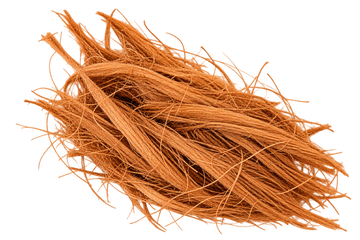
Long strands
Contributes to the fibrous framework of a blend.
Fibre length and packing influence pore structure.
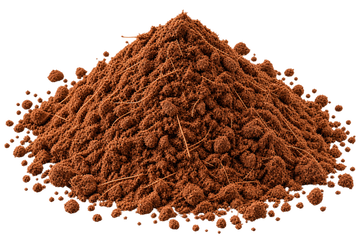
Coco peat
Fine material that contributes to water retention.
Particle grading affects water and air balance.
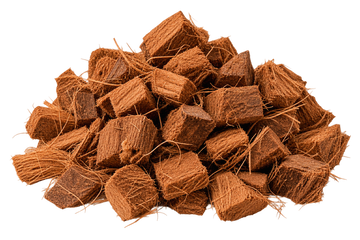
Cut husk pieces
Contain both fibre and pith within coarse pieces.
Size and proportion can influence air-filled pore space.
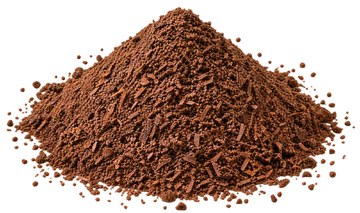
Size fraction
The smaller particles within processed coir materials.
Their proportion can affect pore space; they are not a separate anatomical layer.
Layers and tissues are different. Exocarp, mesocarp and endocarp are layers of the fruit wall. Fibre bundles and pith tissue occur within the mesocarp. Coir chips are cut pieces of husk—not a separate anatomical layer. The white flesh and central cavity belong to the seed interior, not the coir husk. Textures are illustrative: pith occurs between fibres, not as a discrete fruit-wall layer.
Botanical reference: Fruit Biology of Coconut (Cocos nucifera L.)
A typical processing route. Sequence and treatment requirements depend on the product specification.

Collected after coconut harvest

Fibre and pith separated and cleaned

Particles sorted to specific sizes

Washing reduces soluble salts; buffering adjusts exchangeable cations.

Prepared to an agreed specification and checked against relevant criteria.
The same blend can behave differently when container depth, packing and irrigation change.
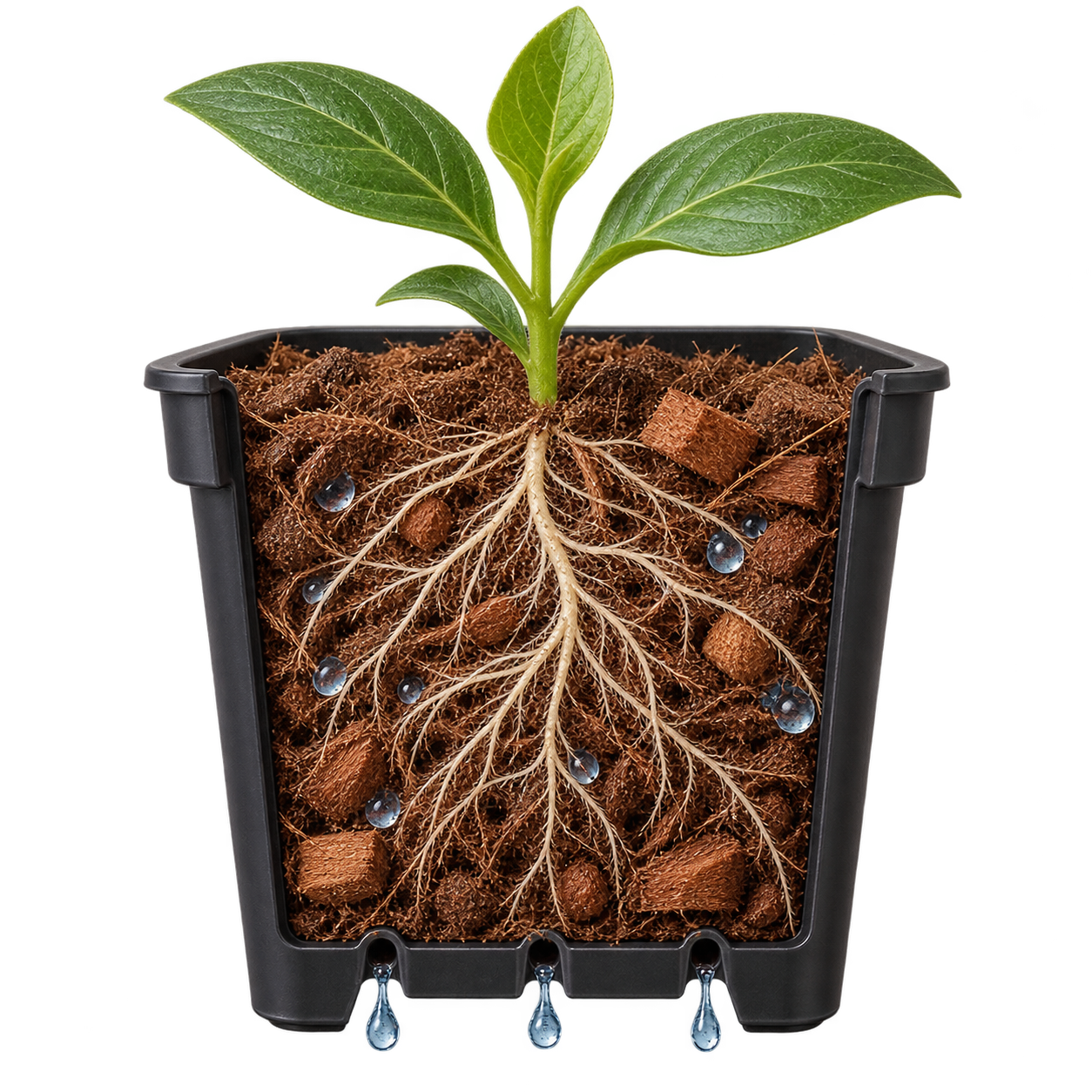
Water is held within and between particles. Total water held is not the same as water readily available to roots.
As water drains, some pore spaces refill with air. Root-zone aeration depends on both substrate structure and water management.
A dried material must take up water again. Evaluate hydration and wetting uniformity under the intended irrigation method.
Container depth, drainage openings, packing and irrigation frequency all influence the water–air balance.
A complete specification considers both how the material behaves and its chemical condition. These are assessed with different tests.
Structure · Water · Air
How the material is structured
Compare results using consistent preparation and test methods.
pH · EC · Nutrient ions
The chemical environment around roots
EC indicates soluble salts collectively; it does not identify individual ions.
Washing and buffering address different aspects of chemistry. Requirements and acceptance criteria should be agreed for the intended application.
Build a particle profile and see how changing the relative proportion of pith, chips and fibre shifts the substrate's physical tendencies. This version shows directional behaviour rather than laboratory-style numerical claims.
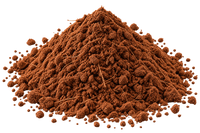
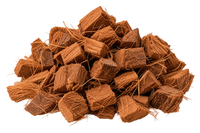
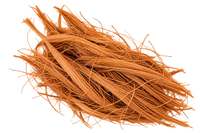
This blend combines moisture-retentive pith with coarse chips and structural fibre, giving a more balanced set of physical tendencies.
Beyond water and air
Substrate particles and the surrounding solution interact chemically. Understanding exchange helps explain why washing, buffering and nutrient management answer different questions.
Dissolved ions in pore water
Cations associated with exchange sites
The mechanism
Some negatively charged sites on organic material hold and exchange positively charged ions with the surrounding solution. Calcium, magnesium, potassium and sodium are examples of these cations.
Exchange is reversible. The balance between dissolved and site-associated ions responds to material properties and solution conditions.
The capacity
Cation exchange capacity describes the amount of exchangeable positive charge a material can accommodate. Occupancy describes which cations are associated with those sites.
Changing the ions occupying exchange sites is not the same as increasing CEC. Exchange capacity in organic materials depends on pH as well as the material and measurement method. Report CEC with its method, measurement pH, units and reporting basis; do not assume one value for every coir product.
The solution
Electrical conductivity (EC) indicates the conductivity of a solution and is used to assess soluble salts collectively. CEC concerns exchangeable charge on the material.
A low EC reading alone does not establish exchange-site occupancy or confirm that buffering has achieved a specified result. Nutrient availability also depends on solution chemistry and crop conditions.
The treatment
A treatment that changes which cations occupy exchange sites, commonly by supplying calcium. Released ions can then leave during drainage or rinsing.
This differs from buffering against changes in pH. Treatment suitability and verification depend on the material and intended application.
Washing reduces soluble salts; coir buffering changes exchange-site occupancy. This is different from buffering against changes in pH. Neither treatment label alone establishes a measured CEC or guarantees a crop response.
Coirology · Substrate Science
Follow the ions. Understand washing, exchange and fertigation.
One Ca²⁺ or Mg²⁺ balances two negative charge units. Groups represent charge equivalents, not literal paired binding sites.
01 / Before washing
Soluble salts occur in pore water, while other cations occupy negatively charged coir exchange sites. Starting composition varies with raw material and processing.
02 / Add water
Adding low-salt water spreads dissolved ions through a larger water volume. Concentration falls, but the amount of salt has not yet been removed. Calcium-containing water can also influence exchange.
03 / Drain / rinse
Drainage carries dissolved ions out of the coir. Exchange-held sodium and potassium may remain. Washing does not establish a calcium-balanced exchange complex.
04 / Calcium treatment
Calcium supplied in solution can replace some sodium and potassium held on coir. Released ions enter the pore water. Calcium nitrate also supplies nitrate; treatment can initially increase EC.
05 / Rinse again
Subsequent drainage or rinsing carries released sodium and potassium away. Some remain on exchange sites and in solution. This example does not define a treatment endpoint.
06 / Fertigation
Nutrient inputs, root uptake and drainage change the surrounding solution. Cations exchange reversibly with coir. Potassium is an essential nutrient; the aim is an appropriate nutrient balance, not its complete removal.
Soluble calcium treatment
A readily soluble calcium source. Calcium participates in cation exchange; nitrate remains in solution. Treatment may initially raise EC. Displaced sodium and potassium are removed through subsequent drainage or rinsing.
Compare a different amendment
A slower calcium and magnesium amendment that also neutralises acidity. Dissolution depends on pH, particle size and contact time. It is not shown as an equivalent rapid calcium-nitrate buffering treatment; suitability requires formulation-specific evaluation.
Conceptual illustration—not a treatment recipe or measured result. Symbols show selected ions, not a complete charge-balanced solution. Exchange depends on water composition, concentration, pH and material. Calcium is not permanently bound.
A practical conversation
Start with the application, then agree the material and verification requirements.
Application
01Define the crop, growth stage, intended duration and the performance questions you need to answer.
Growing system
02Record container type, depth, volume, drainage and whether the system is open or recirculating.
Management
03Describe the irrigation method, frequency and source-water characteristics that affect management.
Physical properties
04Agree the required grading, fibre length and chip proportion rather than relying on product names alone.
Chemical treatment · Supply
05Define washing or buffering requirements, format, compressed dimensions and hydration needs.
Verification
06Specify sampling, preparation, relevant measurements and acceptance criteria before production.
A useful specification connects the material to its intended use.
Material analysis and growing trials answer different questions. Use them together when developing or changing a substrate.
Agree the question, intended application and acceptance criteria before testing.
Collect representative material and record its batch identity and handling history.
Measure relevant physical and chemical properties with agreed methods.
Evaluate irrigation, drainage and crop response under relevant growing conditions.
Review the evidence, adjust the formulation where needed and confirm the specification.
How to read a substrate test
Compare results obtained using the same sampling, preparation and extraction method. Record the method and units alongside pH, EC and ion results. EC values from different extraction methods are not directly interchangeable. Interpret findings against the crop, irrigation water and intended growing system.
Choose the next step around your sample, crop or supply requirement.
Understand your material
Analyse a sample and investigate its physical or chemical characteristics.
Evaluate in use
Evaluate a formulation through a trial programme suited to your question.
Match your berry crop
Explore crop-specific substrates for professional berry production.
Plan commercial supply
Discuss processing, product specifications and commercial supply.
Have a sample, crop or supply question? Talk to our technical team →
Substrate Science Understand the principles here. For your own sample, crop or project, choose specialist support.