
COIROLOGY HELP & ADVICE
Good growing starts with clear answers
Practical help with choosing, preparing and using coir—from your first pot to your next growing project.
Search the questions and answers, or browse a topic below.
No matching answers. Try another word or contact us for help.
Ask our team →Choosing the right product
Find the format and formulation that fit your growing plans.
What is the difference between plain coir and compost?
Plain coir provides a growing-medium component; it is not a complete plant feed. Our All Purpose Compost Bricks contain added nutrients, while plain Coir Bricks do not. Choose by the formulation and your plant’s needs—not just the word “coir”. Check the pack for preparation and feeding instructions.
Should I choose a brick, a block or coir chips?
Bricks are useful for smaller batches; larger blocks suit projects needing more material at once. The format describes compression and quantity, not necessarily the formulation. Coir chips are a coarser husk component that can change pore structure in a suitable blend. Match the finished mix to your plant, pot and watering routine.
What are coir and coco peat made from?
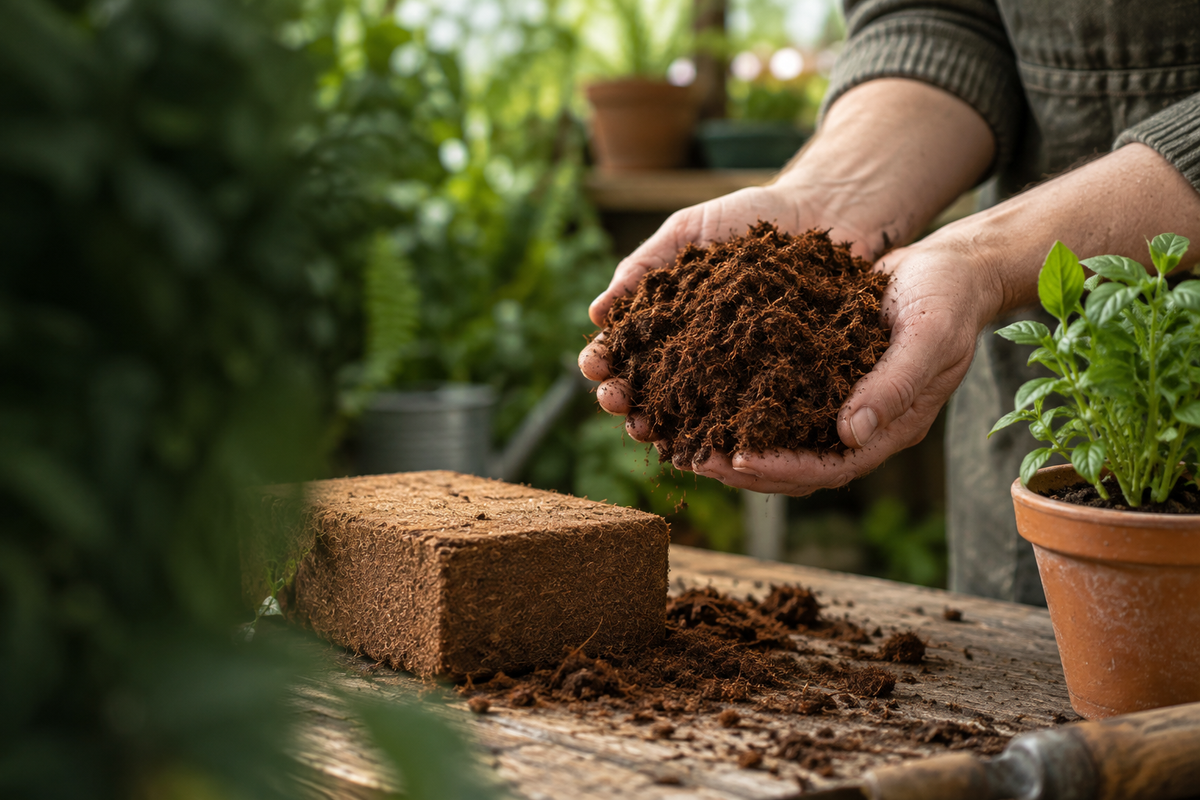
Coir comes from the fibrous outer husk surrounding a coconut’s hard shell. Processing separates fine pith, fibre and chips. Coco peat is another name for the fine pith—it contains no peat. These components can be graded and blended to create different growing-media structures.
Why choose peat-free growing media?
Peatlands store carbon and support distinctive habitats. Choosing peat-free products reduces demand for horticultural peat. Coir makes use of coconut husk material, but processing, water use and transport still contribute to its environmental footprint. Choose a suitable product and prepare only what you need.
Does natural coir mean certified organic?
No. Plant-derived organic matter is different from approval for use in organic growing. Certification or input approval applies to its stated products and scope, not automatically to every coir product or blend. Check the specific product information, or ask us for the relevant current approval details.
Preparing & using your coir
Start small, hydrate carefully and store the rest for later.
How do I hydrate a coir brick or block?
Place the product in a clean container with plenty of room for expansion. Follow its pack instructions and add water gradually, allowing time for absorption. Gently loosen the expanded material and check for dry centres. Adjust moisture before planting; hydration prepares the medium but does not replace a feeding programme where one is needed.
- 01Add water gradually
- 02Allow to expand
- 03Loosen & use
Can I prepare one brick at a time?
Yes—individual bricks let you prepare a smaller batch and keep the remaining bricks dry. Use a stable container at a comfortable working height. Expanded, wet material is heavier than the dry product, so plan where you will hydrate it before adding water.
Why can the expanded volume vary?
Pack volumes are approximate and refer to prepared, loosened material. Water added, loosening, particle structure and compaction all affect the volume you measure. Follow the product instructions and avoid pressing the material down when checking its expansion.
How should I store unused coir?
Keep unprepared bricks and blocks dry, covered and protected from contamination. Store away from children and animals. Prepare only what you expect to use; damp material needs suitable ventilation and regular checks. Follow any product-specific storage guidance, especially for blends containing added nutrients.
Plant care & troubleshooting
A few practical checks can make everyday growing easier.
Do I need to add plant food?
Plain coir is not a complete fertiliser. Plants need an appropriate feeding programme suited to their stage of growth and growing conditions. Products with added nutrients have different instructions; check the label before adding extra feed, and avoid assuming every coir product needs the same treatment.
How often should I water plants in coir?
Check moisture within the root zone rather than relying only on the surface or a fixed timetable. Plant size, pot drainage, temperature and the finished mix all matter. Allow excess water to drain where the growing system requires it, and adapt watering as the plant and conditions change.
When should I add chips or perlite?
Chips and perlite can change pore structure and the balance of water and air in a mix. Their effect depends on particle size, proportion, the other ingredients and the container. Use a plant-appropriate blend; adding coarse material does not guarantee drainage or make a blocked drainage hole effective.
What if I see mould on the surface?
Coir is not automatically sterile or pest-proof. Persistent moisture, organic debris and limited ventilation can encourage visible fungal growth. Review watering, drainage, airflow and hygiene, and remove affected debris. If plants are deteriorating or the cause is unclear, seek advice rather than treating all growth as harmless.
What do pH and EC tell me?
pH influences nutrient availability. Electrical conductivity (EC) indicates dissolved ions in the tested solution; it does not identify individual salts or prove balanced nutrition. Results depend on the testing method. Use the specific product or batch information, and compare measurements made with the same method and units.
What is the difference between washed and buffered coir?
Washing removes soluble salts with drainage water. Buffering is a separate treatment that changes the cations held on coir’s exchange sites, typically using calcium-containing solutions to displace some sodium and potassium. Washed does not automatically mean buffered, and neither treatment provides a complete ongoing plant feed.
Coir for animal habitats
Choose around the species, texture and enclosure—not just the pack size.
Which coir should I choose for an animal habitat?
Coco Habitat is fine coir; Coco Terrain is coarse husk chips. Our plain 6 × 650g Coir Bricks are another fine-coir option, with no added fertiliser, lime or wetting agent. Suitability depends on species, life stage and enclosure conditions. Do not substitute fertilised compost or perlite blends for habitat substrate.
Can I combine fine coir and coarse chips?
They can be combined in suitable humid reptile setups where the species’ care plan supports both textures. Prepare them separately and assess moisture and footing. There is no universal ratio, and a coir-and-chip blend is not automatically a complete bioactive substrate. Ask for product guidance around your existing care plan.
Is coir suitable as hamster bedding?
Fine coir is offered for a separate digging-enrichment tray, not as a replacement for deep, suitable nesting and burrowing bedding. Hydrate and loosen it outside the enclosure, then dry thoroughly before use. Coarse Coco Terrain chips are not recommended for this activity.
Orders, delivery & returns
Useful answers before and after your order arrives.
Where can I check delivery charges and times?
Check our delivery policy and the options available for your address at checkout. Product pages also show the delivery summary. Delivery estimates can vary by destination and dispatch conditions, so contact us before ordering if your project has a firm deadline.
How do I track an order or report a delivery issue?
Check your dispatch confirmation for tracking details, including your spam folder. If something is missing, delayed or damaged, contact us with your order number and a short description. Photos of the packaging and affected product can help us understand a damage issue.
How do I request a return?
Read the returns policy for the applicable conditions and process, then contact us with your order number and reason for return. If the item is faulty, damaged or incorrect, please explain the issue so we can advise on the next step.
Buying for your business
From repeat orders to your own retail range.
Can I order in bulk or develop my own retail range?
Yes. For wholesale or container supply, share the product specification, format, volume and destination. For a private-label retail range, include your target application and packaging requirements. We will discuss the relevant manufacturing and supply options.
How do you plan for batch consistency and supply changes?
We work around an agreed specification and relevant quality checks. Raw-material variation, seasonal rainfall, production capacity and ocean freight can affect supply. Planning order timing, packaging and delivery scope helps manage these risks; compare equivalent specifications and commercial terms.
Still have a question?
A little detail goes a long way. Tell us your product, growing project or order number so we can help.
Ask our teamProduct supportinfo@coirology.com
Sales & orderssales@coirology.com