
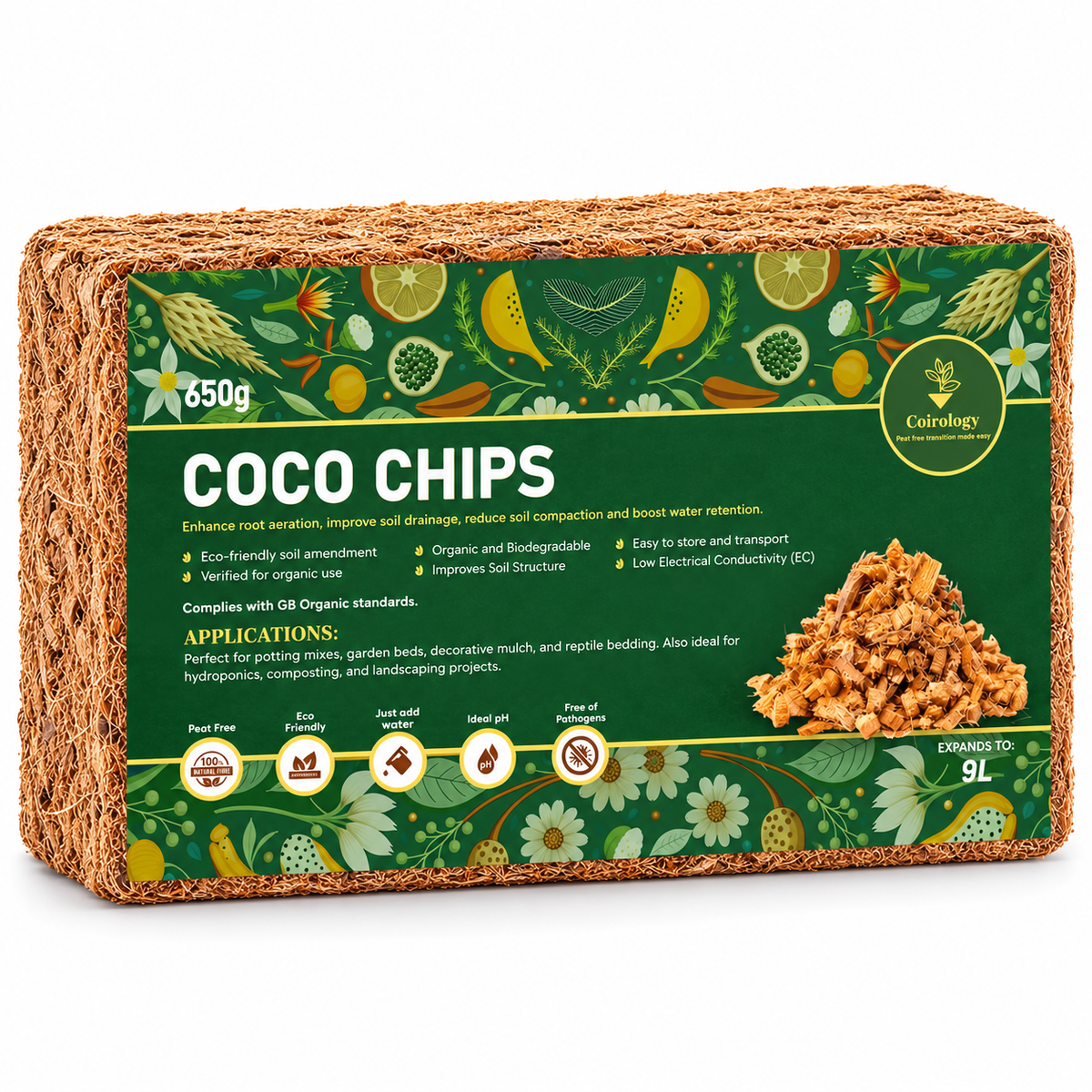
Coco Coir Chips 650g / 9L
One 650g compressed block of coconut-husk chips. Approximately 9L after hydration and loosening.
 Peat-free chips
 One compact block
 Hydrate & loosen
 Chunky planting mixes
A coarser component. A mix matched to your plants.

-

-

-

-


Coco Coir Chips 650g / 9L
Coco Coir Chips 650g / 9L
Couldn't load pickup availability
-
 Free UK delivery on orders £25 and over.
-
30 day returns
-
Secure checkout

England & Wales: Next working day — order before 3pm.
Northern Ireland & Scotland: 2–3 working days.



Peat-free material
Made from coconut husk.

Chunky structure
Coarser than fine coco coir.

Absorbs moisture
Husk chips hold water too.

Approx. 9 litres
From one hydrated 650g block.

Blend to suit
For suitable open potting mixes.


ABOUT THIS ITEM
Product Details
Coarse coconut-husk chips — Larger fibrous husk pieces provide a different texture from fine coco coir. Use them where your planting mix calls for a chunkier, more open component.
One compact 650g block — The compressed block expands to approximately 9 litres when hydrated and loosened. Keep it dry until needed, then prepare in a tub with room for expansion.
Mix for the plant — Combine with suitable components for your orchid, aroid or container plant. Species, pot depth and watering routine determine which blend is appropriate.
Hydrate before use — Follow the pack directions, allow the chips to absorb water and gently separate compressed pieces. Let surplus water drain before preparing your planting mix.
Water and air together — Coarse chips can contribute larger pores, but the husk also retains moisture. Use a draining pot and check the root zone before deciding when to water again.
Provide ongoing nutrition — Treat chips as part of the growing-medium structure. Supply a balanced feed suited to your plants, and reassess watering as roots grow through the container.

Find the right application.
-
 Aroid and climbing-houseplant blends
-
Suitable orchid potting mixes
-
Tropical foliage-plant blends
-
Coarse components for container growing
-
Combining with fine coir where appropriate
-
Small-batch custom planting mixes

How to use
Prepare, use and care for your substrate.
 1
Set up
Place the block in a stable tub with room for around 9 litres of expanded chips.
 2
Hydrate and separate
Follow the pack directions, allow expansion and gently loosen the chips. Drain excess water.
 3
Choose your blend
Mix with appropriate components for your plant. Distribute chips evenly through the blend.
 4
Pot up
Use a container with drainage holes. Fill gently around the roots without forcing the mix down.
 5
Water and feed
Check moisture inside the pot and provide suitable nutrition. Adjust care as the plant establishes.


PRACTICAL PREPARATION
Handling & storage
-
Compact before hydration
Store the 650g block dry until needed. Hydrated chips weigh more, so transfer them in manageable portions.
-
Prepare at a suitable height
Set the tub on a stable surface and keep water and tools within reach. Allow time for the block to soften.
-
Mix near the planting area
Keep prepared chips and other components close to your pots, reducing the need to carry a full wet tub.
Technical specifications
| Pack contents | 1 × 650g compressed block |
|---|---|
| Approximate expanded volume | 9L after hydration and loosening |
| Base material | Peat-free coconut-husk chips |
| Structure | Coarse, fibrous husk pieces |
| Intended horticultural use | Component in suitable orchid, aroid and container blends |
| Preparation | Hydrate and loosen; follow pack instructions |
| Nutrition and storage | Use crop-appropriate feed; store unhydrated material dry |

-

Larger pore spaces
Coarse pieces influence the mix’s structure.
-

Water within the husk
Chips retain moisture as well as creating spaces.
-

Care still matters
Match drainage, irrigation and nutrition.


Product FAQ
How are chips different from fine coco coir?
Chips are larger pieces of coconut husk. Fine coir has a finer texture. Combining them in suitable proportions changes the structure and water behaviour of a planting mix.
How much does one block produce?
One 650g block expands to approximately 9 litres. Final volume depends on hydration and how thoroughly the compressed pieces are loosened.
Can I use the chips alone?
Only where the plant and growing method are suited to that structure. Many plants need a blend. Check the species’ requirements for moisture, aeration and nutrition before choosing the mix.
Will chips prevent overwatering?
No growing-medium component guarantees this. Chips still absorb water. Container drainage, the rest of the blend, root growth and your watering routine all affect moisture around the roots.
Should chips form a layer at the bottom of the pot?
Use chips as an evenly distributed component of a suitable blend, rather than relying on a separate bottom layer to improve drainage. Always use an appropriate draining container.
Are the chips suitable for every orchid or houseplant?
No. Different species need different conditions. Use chips where a coarse component is appropriate and choose the other ingredients, feed and watering routine around the plant.