
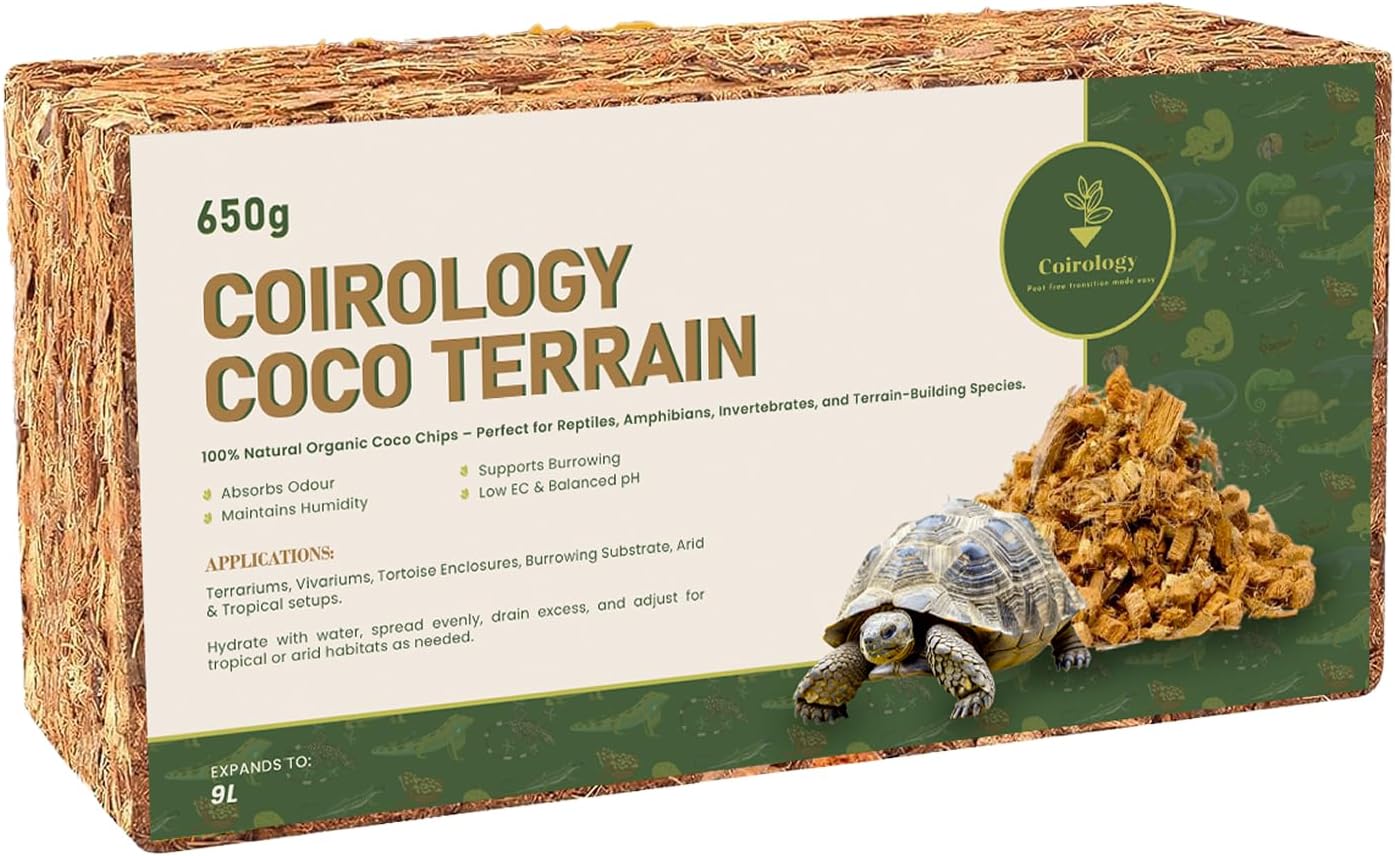
Reptile & Terrarium Substrate 650g
Choose 1 × 650g or 4 × 650g coarse coconut-husk packs. Approximately 9L per pack after hydration and loosening.
 Peat-free husk
 1 or 4 × 650g packs
 Hydrate & loosen
 Coarse texture
Natural texture. Care matched to your animal.

-

-

-

-

-

-

-

-

-


Reptile & Terrarium Substrate 650g
Reptile & Terrarium Substrate 650g
Couldn't load pickup availability
-
 Free UK delivery on orders £25 and over.
-
30 day returns
-
Secure checkout

England & Wales: Next working day — order before 3pm.
Northern Ireland & Scotland: 2–3 working days.



Peat-free material
Made from coconut husk.

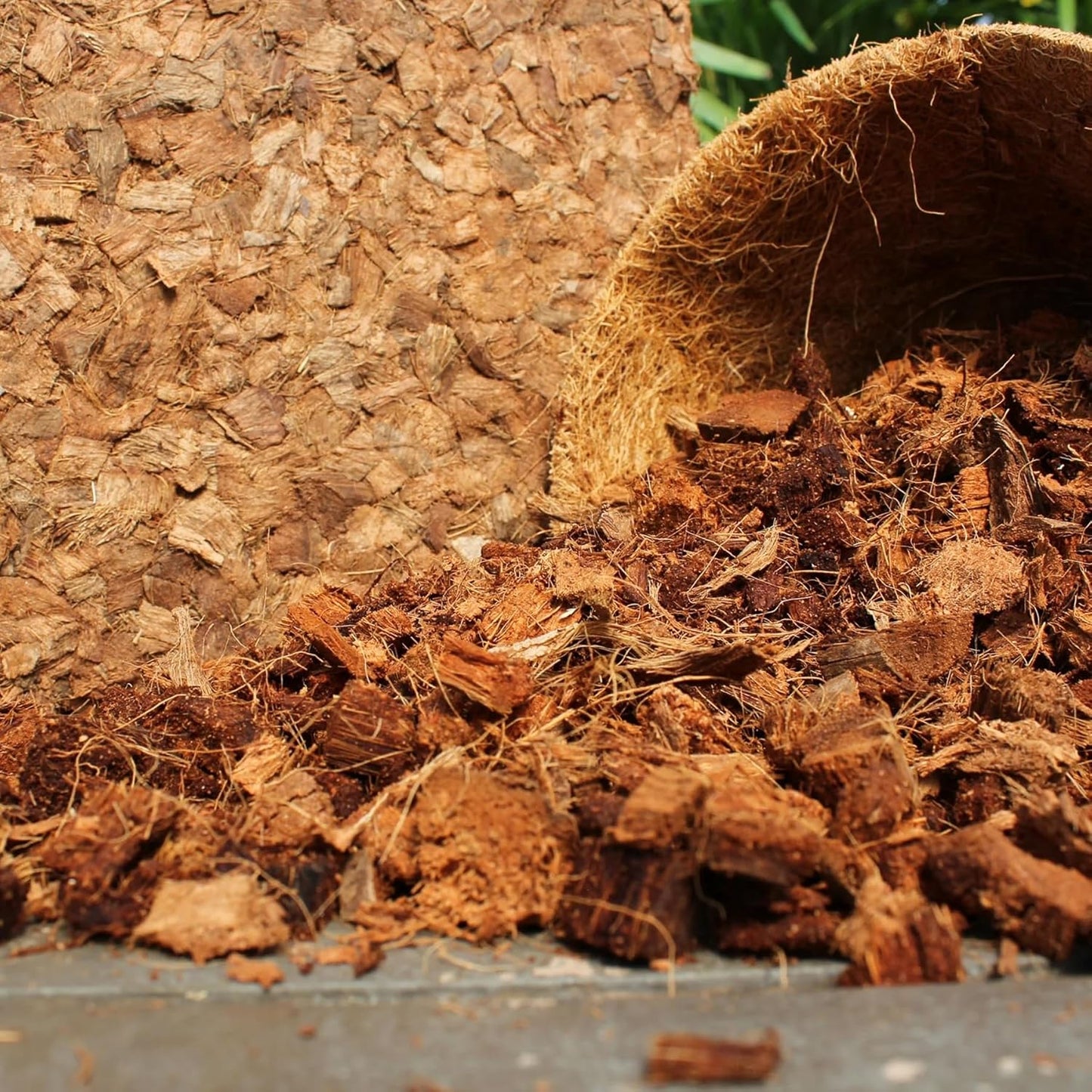
Coarse chips
Larger fibrous husk pieces.

Absorbs moisture
Manage to suit the habitat.

Approx. 9L per pack
Choose one or four 650g packs.

Compact to store
Keep the unused block dry.


ABOUT THIS ITEM
Product Details
Coarse, fibrous texture — Coco Terrain contains larger coconut-husk pieces. It differs from fine coco coir, so choose it where your animal’s care requirements call for a coarse substrate.
Choose your pack size — Select one 650g pack or four packs. Each expands to approximately 9 litres; prepare individual packs as needed and keep the remainder dry.
Prepare for the species — Follow the pack directions, drain excess water and adjust moisture before adding chips to the enclosure. A humid setup is not suitable for every reptile.
Build the whole habitat — Combine suitable substrate with the right hides, temperature gradient and ventilation. Check humidity with a reliable instrument and adjust care as needed.
Keep feeding areas clear — Loose substrate can be swallowed with food. Use an appropriate clean feeding surface or method and follow species-specific advice to reduce accidental ingestion.
Maintain a clean enclosure — Remove waste and soiled material promptly. Replace substrate when required and review damp areas, ventilation and the overall condition of the habitat.

Find the right application.
-
 Terrariums requiring a coarse husk substrate
-
Species-appropriate tropical habitat setups
-
Moisture-managed enclosure areas
-
Custom terrarium substrate blends
-
Replacing soiled substrate in suitable habitats
-
Prepared substrate for researched bioactive systems

How to use
Prepare, use and care for your substrate.
 1
Check suitability
Confirm that coarse coconut-husk chips suit your animal and planned habitat.
 2
Hydrate the block
Use a stable tub, follow the pack directions and allow the compressed chips to soften.
 3
Loosen and drain
Separate the chips fully. Drain excess water and adjust moisture to the species before use.
 4
Arrange the habitat
Add the appropriate depth alongside suitable hides, ventilation and environmental controls.
-
5
Monitor and maintain
Check conditions regularly, remove waste promptly and replace soiled substrate as needed.


PRACTICAL PREPARATION
Handling & storage
-
Store unused packs dry
Keep unused 650g packs in a dry, sheltered place until preparation. Retain the pack instructions.
-
Prepare outside the enclosure
Hydrate in a separate stable tub. Transfer manageable portions once the moisture level is appropriate.
-
Handle gently
Avoid creating airborne dust and wash hands after handling substrate or cleaning the enclosure.
Technical specifications
| Pack contents | Choice of 1 × 650g or 4 × 650g compressed packs |
|---|---|
| Approximate expanded volume | 9L per 650g pack; approximately 36L per four-pack after hydration and loosening |
| Material | Peat-free coconut-husk chips |
| Texture | Coarse, fibrous husk pieces |
| Intended use | Substrate for suitable reptile and terrarium setups |
| Preparation | Hydrate, loosen and adjust moisture to the species |
| Storage | Keep unused compressed material dry and sheltered |

-

Absorbent fibres
Water is retained within the husk.
-

Larger pieces
A different structure from fine coir.
-
Monitor conditions
Moisture and ventilation work together.


Product FAQ
Which pack sizes are available?
Choose 1 × 650g or 4 × 650g. Each pack expands to approximately 9 litres after hydration and loosening; the four-pack provides approximately 36 litres in total. Expanded volume varies with preparation.
Is this fine coir or coarse chips?
This is Coco Terrain: coarse coconut-husk chips. It is different from the fine coir used in the separate hamster digging-substrate listing.
Is it suitable for every reptile?
No single substrate suits every species, life stage or health condition. Check species-specific husbandry guidance, especially for animals needing dry conditions or with a risk of substrate ingestion.
Does it control humidity automatically?
No. The chips absorb water, but enclosure humidity also depends on temperature, airflow and how much moisture is added. Measure and maintain conditions appropriate to the animal.
Does adding chips make a bioactive enclosure?
No. A bioactive setup needs a researched combination of substrate, plants, organisms and environmental management. This product is only a potential component, where suitable.
How often should I replace it?
Remove waste and soiled material promptly. Replacement frequency depends on the animal, enclosure and care routine. Do not rely on odour alone to judge cleanliness.