COIROLOGY JOURNAL · Growing systems
Coir, soilless growing and climate resilience
Protected and soilless systems can help manage growing conditions. Their environmental performance still depends on the complete operation, including energy, water and inputs.
Separate protection from environmental impact
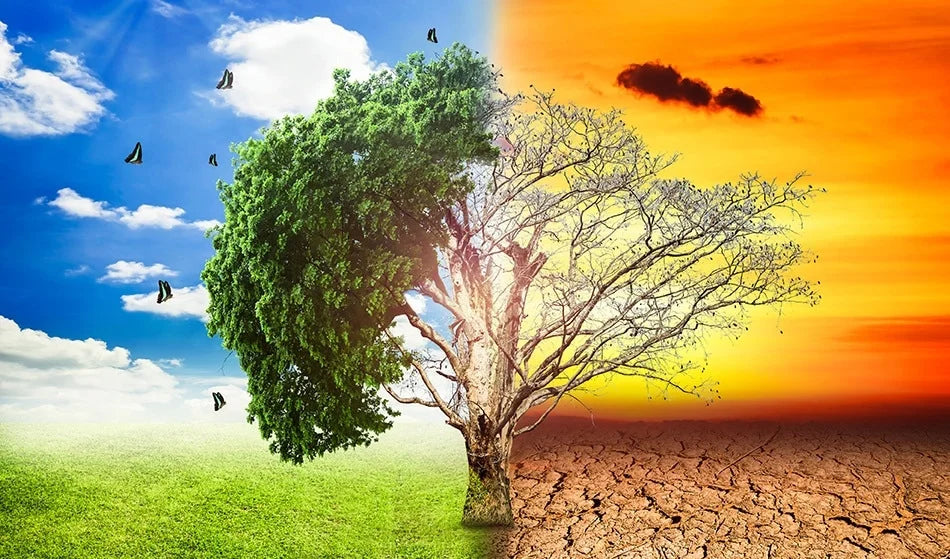
A protected structure can reduce exposure to some outdoor conditions, but its performance depends on design and management. It cannot remove every risk from heat, cold, power failure or water shortage.
Similarly, growing without soil is a description of the production method, not proof that its environmental impact is lower in every location.
Put coir in its proper role
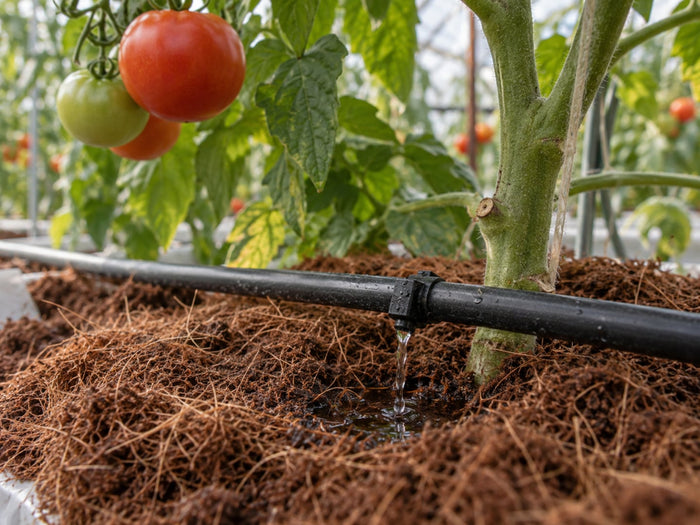
In substrate-based production, coir provides a medium around the roots. Its specification should suit the crop, container and irrigation approach. It does not control greenhouse climate or replace the nutrient programme.
Coir uses coconut-husk material and can replace peat in appropriate formulations. That distinction does not establish the full footprint of a finished product; processing, transport and use also count.
Measure the whole system
A useful assessment includes water input, drainage management, energy, crop output and material inputs over a stated period. Define the comparison before claiming an improvement.
Water recirculation can change demand, while heating, cooling and lighting can add energy requirements. USDA-supported research treats resource efficiency in controlled environments as an active measurement and optimisation problem.
Plan for operational resilience
Consider how the site will respond to interruptions in irrigation, electricity, labour or material supply. Identify the information needed to make decisions when conditions change.
A more suitable substrate may help a particular operation, but resilience also depends on maintenance, monitoring, staff procedures and contingency planning.
Make claims that the evidence supports
Describe the change you made and the outcome measured, including the comparison and limits. Avoid translating an ingredient choice into a blanket carbon or water-saving claim.
See Why Peat-Free? for the peatland context and Precision Growing for monitoring discussions.
Sources & further reading
USDA: resource optimisation in controlled-environment agriculture
PUT IT INTO PRACTICE
Discuss growing-system monitoring
Explore the next step relevant to this topic.
Discuss growing-system monitoring