COIROLOGY JOURNAL · Container growing
How much coco coir do you need for pots? A UK block-and-brick guide
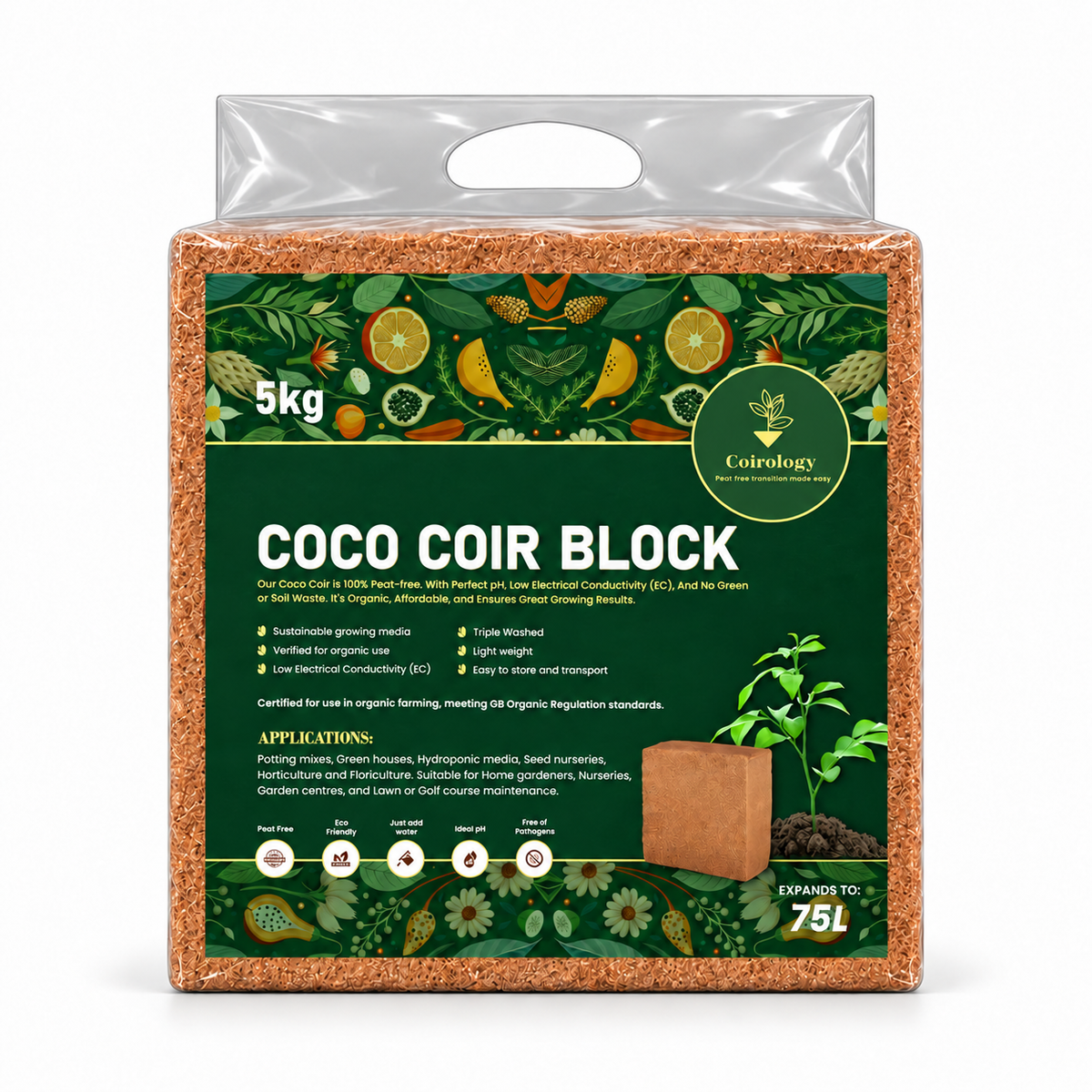
Compressed coir saves storage space, but the size of the dry pack is not the amount of growing medium you will have after preparation. Before buying, estimate the volume your containers need and compare it with the prepared volume stated for the particular product.
Start with the containers, not the block weight
Write down the capacity of each empty pot, planter or tray in litres. Add the capacities for the containers you plan to fill. For example, six containers labelled 12 litres give a nominal total of 72 litres. That is a planning figure, not a promise that you will use exactly 72 litres: rootballs, the level at which you fill each pot and any other mix components change the amount required.
If a pot has no stated capacity, measure or check the manufacturer's specification instead of estimating from its outside dimensions. Decide whether you are filling an empty container, topping up an existing one or blending coir with other ingredients; those are different jobs.
Compare prepared volume with your plan
Coirology's single 5kg coco coir block is described as making approximately 75 litres after hydration and loosening. Its six-pack of 650g bricks is described as making approximately 60 litres in total, with about 10 litres per brick. These are product descriptions, not exact yields for every preparation: the expanded volume varies with hydration and loosening.
In the six-pot example, one 5kg block is close to the nominal 72-litre requirement. That does not guarantee it will fill all six pots. A small buffer or an additional pack may be sensible when you need to complete the job in one session. For several smaller jobs, separate bricks let you prepare a smaller batch at a time. Compare the current product listing and pack instructions before ordering; availability can change.
Prepare only what the selected product instructs
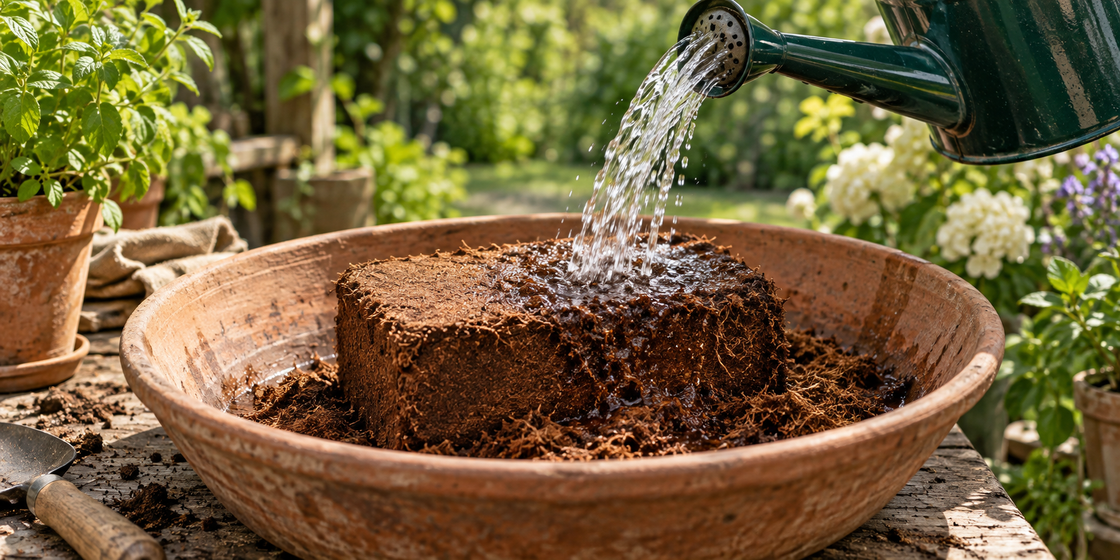
Use a tub with room for expansion. Add water gradually as directed on the pack, allow the compressed material to expand and loosen any firm areas before planting. Prepare the material near where it will be used, and keep unused compressed packs dry. Do not use a single water quantity for every coir format or assume that a dry core has hydrated because the surface feels wet.
Allow for the plant and the finished mix
Coir is a growing-medium component, not a complete feeding programme. Choose the finished mix, drainage and nutrition for the plant and container. If you add other components, calculate how much of the final volume each will contribute rather than buying coir for the full nominal capacity and then adding a blend on top.
Our practical growing checklist covers preparation, nutrition and monitoring after planting. If you are choosing between a coir component and a formulated compost with included feed, read the all-purpose compost or coir guide first.
A short buying checklist
- List the containers and their stated capacities.
- Decide whether you are filling, topping up or blending.
- Compare your estimated coir requirement with the product's approximate prepared volume.
- Choose a pack format that suits the batches you can prepare and use.
- Follow the selected pack's hydration and feeding directions.
Compare the current coir blocks and bricks when you are ready to choose a pack. Buying for a UK growing or retail business at full-container scale? Use the 40HC factory-order guide to prepare your specification and enquiry.
PUT IT INTO PRACTICE
Explore the growing range
Find the next step for your growing or supply requirements.
Explore the growing range