COIROLOGY JOURNAL · Seasonal materials
Autumn leafmould and peat-free gardening
Fallen leaves can become a useful garden material. Start with a clear distinction between leafmould, garden compost and a formulated growing medium.
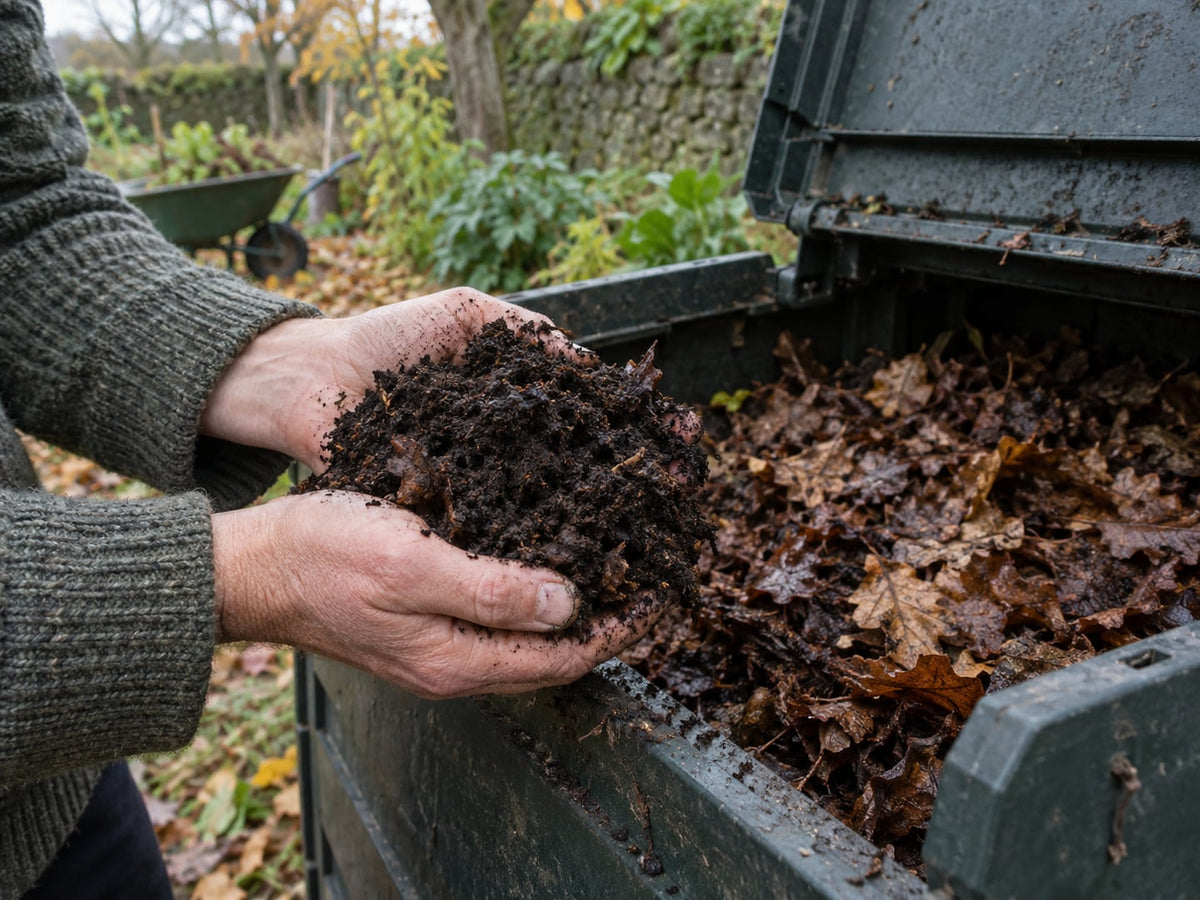
Keep autumn leaves in the material cycle
Autumn provides an opportunity to collect suitable fallen leaves and start a separate leafmould pile. Leafmould is produced as leaves decay; it is not simply a new name for fresh leaf litter or mixed garden compost.
The RHS describes leafmould as a useful soil conditioner and mulch. Its preparation guide explains how to keep collected leaves moist in a ventilated bag or contained heap. Decomposition takes time and varies with the leaves and conditions, so label the collection date rather than expecting an immediate potting product.
Separate the jobs of different materials
A useful peat-free approach begins by asking what the material is for. A mulch sits on the soil surface. A soil conditioner is used to improve soil. A potting medium must suit plants growing within a restricted container. The requirements are not interchangeable.
Garden compost, leafmould and coco coir may all have a place in gardening, but they arrive through different processes and have different characteristics. A bag of coir does not turn an immature leaf pile into a tested potting mix.
Assess the material before choosing a use
Look at the degree of decomposition and the intended application. The RHS distinguishes uses for well-rotted leafmould from less mature material. Follow appropriate guidance rather than assuming that all leafmould is ready for seed sowing because it has darkened.
Keep a note of what went into the pile and separate batches when practical. This makes it easier to compare material over time and avoids mixing newly collected leaves into a batch you had intended to assess for use.
Avoid a universal coir-and-leaf recipe
It is tempting to look for a single percentage blend that suits every plant. In practice, the crop, container, particle structure and management all matter. Adding coir changes the mix; it does not certify its nutrition, pH or suitability for propagation.
For valuable plants or sensitive propagation, start with an appropriate formulated peat-free product or obtain advice on the intended blend. If experimenting at home, use a small comparison, keep the plant and container consistent and record what happens. Do not scale up solely because a material looks similar to a commercial compost.
Plan this autumn for later use
Make room for collection, decomposition and a separate finished-material area. Set a reminder to inspect moisture and review the material before its intended use. Treat leafmould as a longer-term garden resource rather than an instant replacement for a bagged product.
Our home-made compost and coir guide explains their different jobs. For choosing a purchased growing medium, read how to choose peat-free gardening products.
Sources and further reading
PUT IT INTO PRACTICE
Explore the growing range
Find the next step for your growing or supply requirements.
Explore the growing range