
Coco Coir Blocks 4 × 5kg / 300L
Four compact 5kg blocks provide approximately 300 litres of peat-free growing medium after hydration and loosening. Prepare one block at a time and keep the remainder dry.
 Peat-free coir
 4 × 5kg blocks
 Hydrate in batches
 Container growing
Prepare what you need. Store the rest dry.

-

-

-

-

-

-

-

-


Coco Coir Blocks 4 × 5kg / 300L
Coco Coir Blocks 4 × 5kg / 300L
Impossibile caricare la disponibilità di ritiro
-
 Free UK delivery on orders £25 and over.
-
30 day returns
-
Secure checkout

England & Wales: Next working day — order before 3pm.
Northern Ireland & Scotland: 2–3 working days.



Peat-free
Made from coconut husk.

Calcium buffered
Prepared for nutrient management.

Moisture retention
Coir holds water in the root zone.

Approx. 75L per block
Around 300L from four blocks.

Flexible growing
For suitable pots and systems.


ABOUT THIS ITEM
Product Details
75L from each 5kg block — Each block expands to approximately 75 litres, giving around 300 litres from four blocks. Prepare individual blocks in a large tub with enough room for expansion.
Washed and buffered — Washing reduces soluble salts, while calcium buffering treats exchangeable ions held by the coir. These are separate steps in preparing the growing medium.
Plan your plant nutrition — Buffering is not a complete fertiliser programme. Choose a suitable feed for your crop and water supply, then adjust it to the plant’s stage of growth.
Build the right structure — Use alone where suitable, or blend with coir chips or other appropriate components. Match the texture to your crop, container depth and watering approach.
Prepare before planting — Hydrate according to the pack, loosen all compacted areas and check moisture throughout. Fill a container with drainage holes without pressing the coir too firmly.
Monitor as plants grow — Check moisture within the pot rather than watering by the calendar alone. In hydroponic systems, monitor the nutrient solution and drainage as part of routine care.


Find the right application.
-
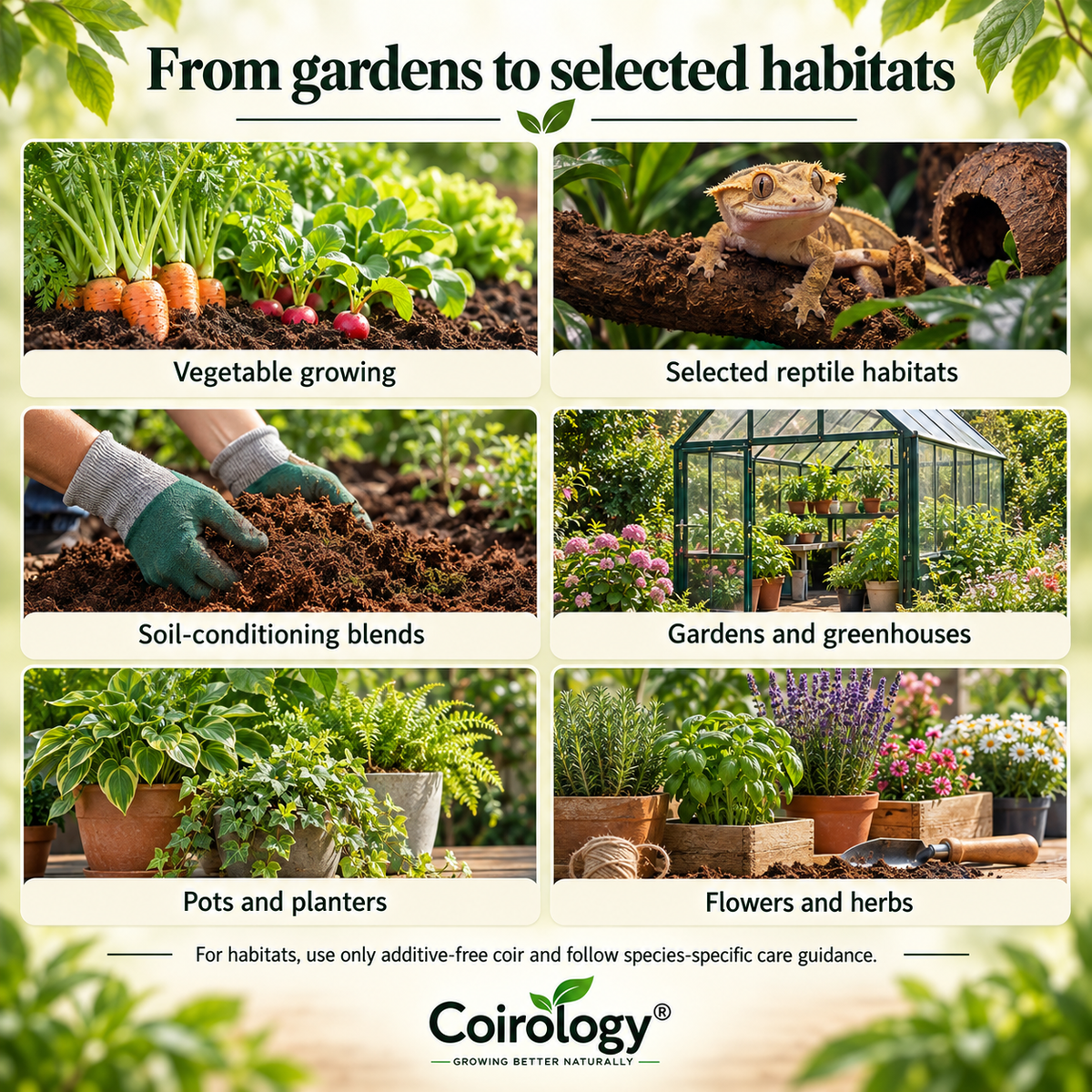
 Vegetables and herbs in containers
-
Strawberries in a suitable growing mix
-
Coir-based hydroponic systems
-
Greenhouse pots and planters
-
Blending with coir chips or other suitable components
-
Propagation where texture and nutrient levels suit the crop

How to use
Prepare, use and care for your substrate.
 1
Hydrate
Place the block in a large tub. Add water gradually following the pack directions and allow it to expand.
 2
Loosen
Break up softened areas by hand until moisture and texture are even. Do not leave a dry core.
 3
Prepare and plant
Choose your crop-appropriate mix, fill a draining container and plant at the correct depth.
 4
Water and feed
Water in, let excess drain and begin a feeding programme suitable for the crop and system.
 5
Monitor
Check root-zone moisture and plant growth. Review nutrition and irrigation as conditions change.


PRACTICAL PREPARATION
Handling & storage
-

Store unused blocks dry
Keep compressed blocks protected from moisture. Prepare individual blocks as needed and leave the remainder dry.
-

Plan the lifting
Each dry block weighs 5kg; four blocks weigh 20kg before packaging. Use assistance for the full pack and move hydrated coir in small portions.
-

Prepare near the plants
Hydrate close to your growing area. Move the expanded coir in small portions instead of lifting a full, wet tub.


Technical specifications
| Block format | 4 × 5kg compressed coir blocks; 20kg before packaging |
|---|---|
| Expanded volume | Approximately 75L per block; 300L from four blocks |
| Base material | Peat-free coconut coir |
| Processing | Washed and calcium buffered |
| Nutrition | Use a complete feeding programme appropriate to the crop |
| Preparation | Hydrate and loosen before use; follow pack directions |
| Storage | Keep unused blocks dry and sheltered; prepare individual blocks as needed |

-

Water and air
Texture, container shape and irrigation work together.
-

Ion exchange
Buffering changes ions held at coir exchange sites.
-

Crop nutrition
Use a feed suited to your crop and growing system.


Product FAQ
What does buffered mean?
Calcium buffering changes the exchangeable ions held by coir. It helps manage the interaction between the substrate and your nutrient solution; it does not supply a complete crop feed.
Is washing the same as buffering?
No. Washing removes soluble salts with water. Buffering treats ions held on exchange sites in the coir. This product is supplied washed and buffered.
How much growing medium will I get?
Each 5kg block expands to approximately 75 litres after hydration and loosening. Four blocks provide approximately 300 litres in total. Final volume depends on preparation.
Should I add fertiliser?
Plan a suitable feeding programme for your plants. Buffering does not replace balanced nutrition. Follow your fertiliser instructions and account for your water quality.
Can I add coir chips or perlite?
Yes, where they suit the crop and container. Coarser components can alter drainage and air space, but the right blend depends on particle size, packing and irrigation.
Is it suitable for every plant?
No single mix suits every plant. Check the crop’s texture, acidity and nutrition needs. For specialist or salt-sensitive crops, confirm the relevant product specification before use.